Through advanced filtration technology and high - quality materials, we ensure that our DPFs meet the most stringent environmental standards helping to improve air quality and protect the environment.
Through advanced filtration technology and high - quality materials, we ensure that our DPFs meet the most stringent environmental standards helping to improve air quality and protect the environment.

⚠️ Core reasons for regeneration failure
Operation error: Interruption caused by stepping on the brake/accelerator/clutch during regeneration
Hardware malfunction: damaged light bulb, low circuit voltage
Environmental issues: Poor water temperature and narrow space pose risks of exhaust emissions
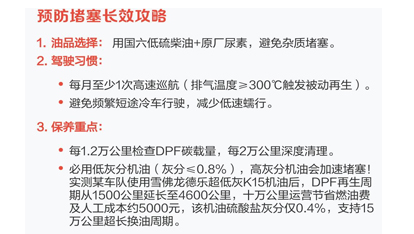
Key measures to prevent blockages
1. Oil selection: Use National VI low sulfur diesel and original urea
2. Driving habits:
At least one high-speed cruise per month (passive regeneration triggered by exhaust temperature ≥ 300 ℃)
Avoid frequent short distance cold driving and low-speed creeping
3. Maintenance focus:
Check DPF carbon load every 12000 kilometers and perform deep cleaning every 20000 kilometers
It is necessary to use low ash engine oil (ash content ≤ 0.8%). After testing, a certain fleet used ultra-low ash engine oil, and the regeneration cycle was extended by three times, saving about 5000 yuan in cost per 100000 kilometers
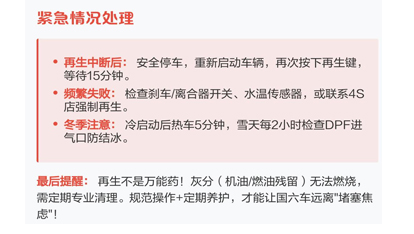
Emergency situation handling
Regeneration interruption: Restart the vehicle after safe parking, press the regeneration button again and wait for 15 minutes
Frequent failures: Check the brake/clutch switch, water temperature sensor, or contact the 4S store for forced regeneration
Winter precautions: Warm up the car for 5 minutes after cold start, and check the DPF intake for anti icing every 2 hours on snowy days
⚠️ Core warning: Ash residue cannot be removed through regeneration and requires regular professional cleaning. Standardized operation and scientific maintenance are fundamental to avoiding blockages.