Through advanced filtration technology and high - quality materials, we ensure that our DPFs meet the most stringent environmental standards helping to improve air quality and protect the environment.
Through advanced filtration technology and high - quality materials, we ensure that our DPFs meet the most stringent environmental standards helping to improve air quality and protect the environment.

National VI emission requirements and technological upgrades
With the implementation of the National VI emission standard, the technological improvement of diesel engines has become a focus. In order to meet this strict emission requirement, designers have made significant upgrades to the engine and its after treatment system. EGR (Exhaust Gas Recirculation)+DOC (Oxidation Catalyst)+DPF (Particulate Filter)+SCR (Selective Catalytic Reduction) has become the mainstream technology route. Specifically, DOC and DPF have been added to the post processor, which play a crucial role in reducing pollutant emissions.
Structure and Function of DPF
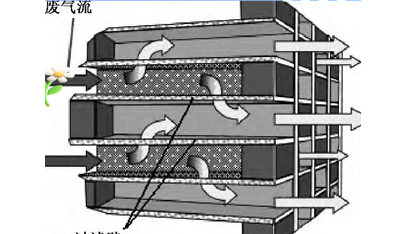
DPF, The Diesel Particulate Filter, also known as a particle trap in Chinese, is a filtering device made of cordierite or silicon carbide that is fired at high temperatures. It is installed in the emission system of diesel engines to adsorb particulate matter such as particles, hydrocarbons, nitrogen oxides, and sulfur in the exhaust, thereby preventing these harmful substances from being released into the atmosphere and causing environmental pollution. According to reports, the efficiency of DPF in reducing PM in China can reach 90%.
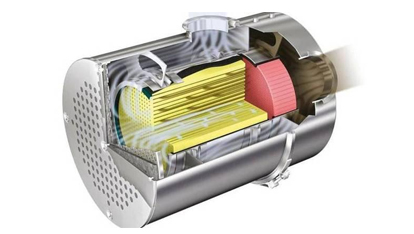
The working principle of DPF is mainly based on wall flow filters. By alternately blocking the inlet and outlet of the carrier pores, the airflow is forced to pass through the porous wall, thereby achieving effective particle capture. In order to reduce the temperature of DPF regeneration, a layer of precious metal coating will be applied to the surface of its pore channels. However, if the contact degree between the particles and the active metal is insufficient, the natural cooling effect of the particles will not be significant, usually only dropping to about 450 ℃, which may affect the regeneration heat release process of the particle trap.