Through advanced filtration technology and high - quality materials, we ensure that our DPFs meet the most stringent environmental standards helping to improve air quality and protect the environment.
Through advanced filtration technology and high - quality materials, we ensure that our DPFs meet the most stringent environmental standards helping to improve air quality and protect the environment.

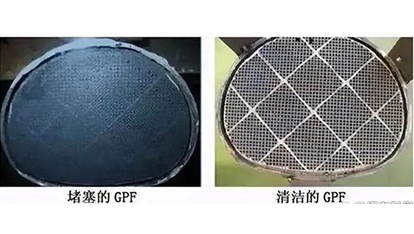
Gasoline vehicles that meet the sixth stage emission standards of the national standard, as well as diesel vehicles that have advanced one stage (hereinafter referred to as 6-b), will be equipped with particulate matter capture devices; Gasoline cars correspond to GPF, while diesel cars correspond to DPF, which is prone to clogging. As the name suggests, its function is to capture particulate matter in exhaust gas. However, the dust holding capacity of the filter element of the trap is fixed, and it needs to be cleaned synchronously while capturing particulate matter, otherwise the trap will gradually fill up; The position of the capture device is in the exhaust system, some are located before the three-way catalyst, some are behind the three-way catalyst, and some are integrated with the four-way catalyst.
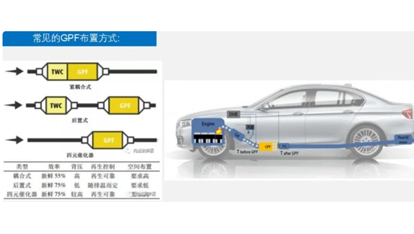
The exhaust system and engine are actually connected. The internal combustion engine used in fuel vehicles has four strokes, namely intake, compression, power, and emissions. The intake and exhaust are instantly connected to the exhaust system, which can be understood as the "exhaust pipe". Even with the addition of a trap, catalyst, muffler, and selective catalytic reduction system (a purification system for nitrogen oxides NOx in diesel engines), this is actually a pipeline.
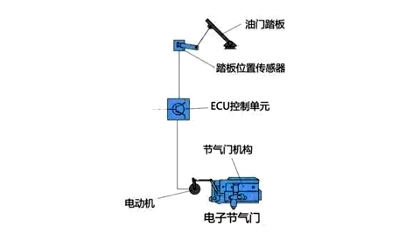
So the accumulation of particulate matter in the filter element of the trap will cause blockage, resulting in the inability of the engine's exhaust gas to be quickly and effectively pressed out of the trap; This is the increase in exhaust back pressure. If the exhaust emissions are not smooth, the intake air will be affected. The reduction of intake air will directly affect the fuel injection amount, because the fuel injection amount is determined by the set air-fuel ratio (air-fuel ratio), and the throttle controls not the oil circuit but the air passage. The actual control is the engine's throttle valve.
The concept of "displacement" refers to the total volume of all cylinders in an engine, or the total fluid volume of the intake or exhaust, so a reduction in intake is equivalent to a reduction in displacement; When the displacement decreases, the torque decreases, and when the torque decreases, the power and horsepower will decrease synchronously. After the power deteriorates, the only way to compensate for it is to forcibly increase the RPM, resulting in a decrease in engine power and a significant increase in fuel consumption.

This is the reason and result of trap blockage. The only way to prevent trap blockage is to drive more frequently in daily life.
The basis for the capture device to clean particulate matter is "high temperature", which comes from the exhaust of the engine; The start-up operating temperature of the trap is above 200 ℃, which requires a longer time to heat the trap. The heating method is to continuously drive or idle at a slightly higher speed, and the continuous driving time needs to be about half an hour to effectively clean; On the contrary, it is easy to get stuck, but who can drive a family car for half an hour every time? So household cars that meet the 6-b standard and diesel off-road vehicles and pickups that meet the 5/6-b standard are more prone to blockage. What should we do about this! It's really annoying.