Through advanced filtration technology and high - quality materials, we ensure that our DPFs meet the most stringent environmental standards helping to improve air quality and protect the environment.
Through advanced filtration technology and high - quality materials, we ensure that our DPFs meet the most stringent environmental standards helping to improve air quality and protect the environment.

Detailed steps for service regeneration
△ Pre cleaning inspection
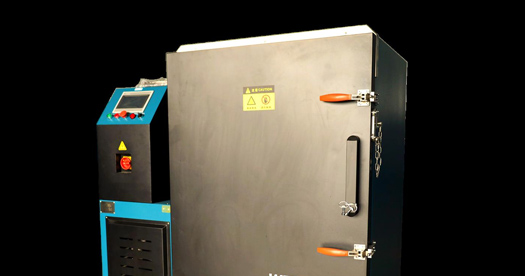
Before cleaning, it is necessary to carefully inspect the condition of the DPF or the entire exhaust pipe carrier and make data records. Subsequently, the carrier is placed on the ash cleaning platform and heated to 600 ℃ by electric heating (the specific temperature varies depending on the DPF) to ensure that impurities such as carbon deposits and grease can be completely burned into ash.
△ Heating to remove impurities
After heating is completed, the equipment heater will stop working, and the high-temperature fan will send cold air into the DPF to quickly reduce its temperature. Burn off carbon deposits through high-temperature electric heating equipment, and the temperature control depends on the type of DPF.
△ Cooling and Cleaning
The cooled DPF carrier is then moved to the soot blowing station for deep cleaning using high-pressure blowing technology. During this process, the automatic air knife and industrial vacuum cleaner will work simultaneously to ensure that all impurities inside the DPF can be thoroughly removed. At the same time, the differential pressure sensor will continuously monitor the differential pressure changes of the DPF, and combine the differential pressure parameters and pre-set calibration data to accurately judge the status of the DPF. After cooling with cold air, high-pressure soot blowing is carried out to remove residual impurities.
△ Effect evaluation
After cleaning, it is necessary to record the data of the DPF carrier again and compare it with the data before cleaning to comprehensively evaluate the regeneration effect. Compare the data before and after regeneration to evaluate the regeneration effect of DPF.