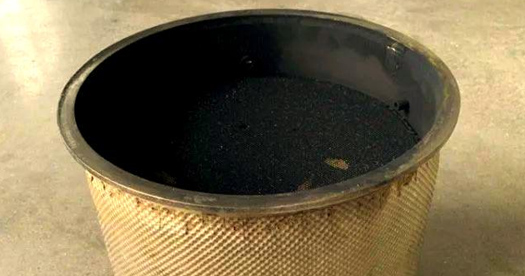
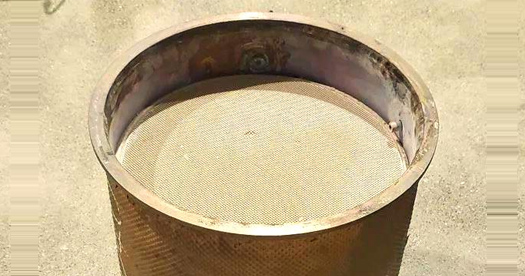
Through advanced filtration technology and high - quality materials, we ensure that our DPFs meet the most stringent environmental standards helping to improve air quality and protect the environment.
Through advanced filtration technology and high - quality materials, we ensure that our DPFs meet the most stringent environmental standards helping to improve air quality and protect the environment.

Active regeneration method
△ Driving regeneration
Active regeneration includes three methods. The first type is automatically controlled by the ECU during vehicle operation, known as driving regeneration. The ECU will control the engine injector to spray diesel during the later stage of combustion or through the injector on the exhaust pipe. These diesel are oxidized and burned in the oxidation catalyst (DOC), increasing the exhaust temperature and causing the internal temperature of the DPF to rise. The captured particulate matter is burned into CO2 and discharged. However, when the DPF adsorbs a large amount of particles (carbon load), driving regeneration may not be able to meet the demand, and parking regeneration is required at this time.
△ Parking regeneration
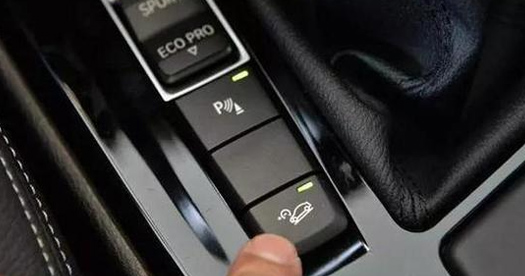
The second type of parking regeneration or one key regeneration requires manual operation when the vehicle is stationary. During vehicle use, the differential pressure sensor at both ends of the DPF will monitor the exhaust back pressure. When the back pressure reaches a certain value, the instrument panel will light up the DPF regeneration indicator light. At this point, if the current driving condition load is small (such as in urban conditions or frequent parking), the regeneration conditions cannot be met. Therefore, parking regeneration can be triggered by pressing the parking regeneration switch while the vehicle is stationary. Subsequently, the idle speed of the engine will increase, and the ECU will control the nozzle to inject diesel into the exhaust pipe. These diesel fuels undergo oxidation and combustion within the DOC, further increasing the exhaust temperature and internal temperature of the DPF, thereby burning the captured particulate matter into CO2 and discharging it. If the parking regeneration is not carried out in a timely manner, it may cause DPF blockage or even complete damage.
△ Service regeneration
The third type of service regeneration refers to removing the DPF and sending it to the Weifu service station for professional equipment cleaning. When the DPF indicator light flashes, the engine malfunction stays on, and there is a torque limit, it means that service regeneration is needed. In addition to insufficient combustion of soot, problems such as burning engine oil may also cause complete blockage of DPF, which requires service regeneration to clean.